Medical disclaimer: This article is for educational purposes only and does not constitute medical advice. Please consult a licensed healthcare provider for diagnosis, treatment, and any decisions related to medication or therapy.
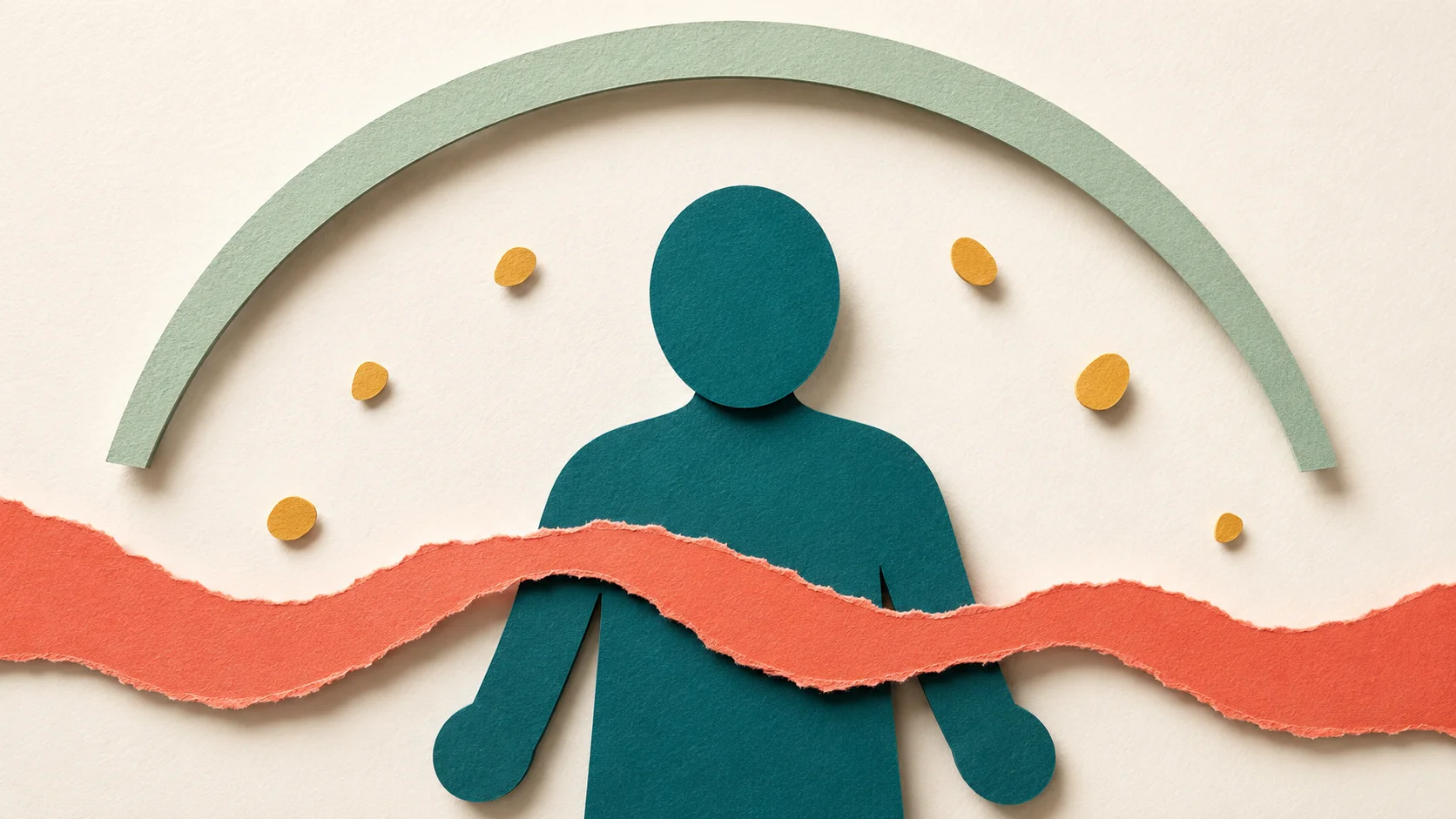
You send a text and get no reply for three hours. A coworker gives you a piece of feedback with a flat tone. A friend cancels plans. For most people, these are minor social friction points. For adults with rejection sensitive dysphoria ADHD, they can feel like a collision — sudden, overwhelming, and completely disproportionate to what actually happened. Rejection sensitive dysphoria (RSD) is one of the most intense and least understood features of ADHD in adults. It’s an extreme, instantaneous emotional reaction — often described as physical pain — triggered by the real or perceived sense of being criticized, rejected, or failing to meet someone’s expectations. According to Dr. William Dodson, a psychiatrist and leading ADHD specialist writing for ADDitude Magazine, in his clinical practice the great majority of adult ADHD patients describe experiencing RSD (Dodson estimates ~99%, though this clinical figure has not yet been replicated in large epidemiological studies) — yet it rarely appears in the standard diagnostic criteria or in the first conversation after a diagnosis. If you’ve recently received a diagnosis, our guide on late-diagnosed adult ADHD covers the full emotional landscape of what comes after. This article is specifically about RSD: what it is, why ADHD brains experience it this way, how it shapes your relationships and career, and what actually helps.
RSD doesn’t mean you’re too sensitive. It means your brain’s emotional brakes aren’t working the way they should — and that’s a neurology problem, not a character flaw.
What Is Rejection Sensitive Dysphoria ADHD?
Rejection sensitive dysphoria is an extreme, rapid-onset emotional response to the perception of rejection, criticism, failure, or the sense of not measuring up to someone’s expectations. The term was coined and popularized by Dr. William Dodson, who observed across decades of clinical practice that adults with ADHD consistently described a specific kind of emotional pain — uniquely intense, instantaneous, and often out of proportion to the triggering event.
“Dysphoria” comes from the Greek for “difficult to bear.” That is a clinically precise description. Adults with RSD don’t experience moderate discomfort at criticism — they experience what many describe as an emotional hit that can peak at its maximum intensity within seconds. It typically resolves within minutes to a few hours once the perceived rejection is clarified or contextualized, which distinguishes it from mood disorders that persist for days.
RSD is not currently a standalone diagnosis in the DSM-5-TR. It is more accurately described as a dimension of emotional dysregulation in ADHD — a feature that the current diagnostic framework significantly underweights. Research summarised across the major ADHD reviews (Shaw et al., 2014, American Journal of Psychiatry; Faraone et al., 2019) finds that emotional dysregulation affects approximately 50–70% of adults with ADHD and consistently ranks as one of the most impairing aspects of the condition in adult daily life, above even attention difficulties in many self-reports.
What RSD actually feels like
Adults who live with RSD describe the experience in strikingly consistent terms:
- A sudden, wave-like feeling of pain, shame, or devastation — not a gradual building of emotion
- A physical sensation in the chest or stomach, often described as being “punched” or “hollowed out”
- An immediate certainty that the rejection is confirmation of their deepest fears about themselves
- A strong urge to escape, go silent, or immediately fix the perceived rupture at any cost
- Disproportionality: the intensity of the reaction feels inconsistent with what actually happened
The perceived trigger doesn’t need to be real. RSD can be activated by a neutral-toned email, a friend who doesn’t laugh at a joke, a partner who seems distracted, or silence where approval was expected. The brain interprets ambiguity as threat.
RSD and the perception gap
One of the most disorienting aspects of RSD is that the person experiencing it often knows, intellectually, that their reaction is disproportionate — yet cannot override it in the moment. This gap between knowing and feeling is not a failure of willpower. It reflects the neurological architecture of how ADHD brains process emotion, which we’ll cover in the next section.
Why ADHD Brains Experience Rejection Differently
The neurological basis of rejection sensitive dysphoria in ADHD lies in the underactivation of the prefrontal cortex combined with a dysregulated dopamine and norepinephrine system. Understanding this mechanism is not just academic — it directly changes how you approach management.
In a neurotypical brain, an emotional alarm signal generated by the amygdala gets modulated by the prefrontal cortex (PFC) before it reaches full conscious experience. The PFC acts as a brake — it contextualizes the signal, compares it to past experience, and calibrates the response. In ADHD brains, this prefrontal modulation is weaker and slower. The emotional alarm signal arrives at nearly full intensity, while the braking system lags behind.
According to Dr. Russell Barkley, one of the most widely cited researchers in ADHD neuroscience, emotional impulsivity — the tendency to react immediately and intensely to emotional triggers — is a core feature of ADHD that standard diagnostic tools consistently miss. Writing in his 2015 book Attention-Deficit Hyperactivity Disorder: A Handbook for Diagnosis and Treatment, Barkley argues that emotion regulation deficits in ADHD are not secondary or comorbid phenomena — they are part of the condition’s fundamental architecture.
For a deeper look at how this connects to your nervous system’s overall capacity to stay regulated under stress, see our article on the window of tolerance in ADHD, which explains why ADHD brains are more easily pushed into emotional dysregulation and what it takes to expand that window over time.
Dopamine, reward, and the approval circuit
ADHD brains show altered dopamine signalling — including reduced dopamine transporter availability and atypical receptor binding — in the reward pathways (Volkow et al., 2009). This creates a heightened sensitivity to both reward and its absence. Social approval activates the same reward circuits as other dopamine-releasing stimuli. When that approval is withheld — through silence, criticism, or perceived rejection — the dopamine drop is sharper and more disruptive than in neurotypical brains.
This is why RSD feels like more than hurt feelings. It feels like withdrawal. The ADHD brain was seeking a dopamine signal through social connection, and instead received its opposite.
Norepinephrine and the alarm response
Norepinephrine — the neurotransmitter responsible for alertness, attention, and the “fight or flight” alarm — is also dysregulated in ADHD. This dysregulation makes the nervous system faster to activate in response to perceived social threat. The body experiences RSD as a genuine threat event: heart rate accelerates, muscles tighten, the urge to act or escape intensifies. This is not metaphorical. RSD activates the same physiological stress response as a physical danger.
How RSD Shows Up in Daily Life — Relationships, Work, and Social Media
Rejection sensitive dysphoria in ADHD doesn’t only surface in dramatic confrontations — it shapes dozens of small decisions every day, often invisibly. The adult with RSD isn’t just reactive in the moment; they’ve built an entire behavioral architecture designed to prevent the next RSD episode.
In relationships
RSD has a profound impact on close relationships. Partners of adults with RSD often describe a pattern that is difficult to understand from the outside: their partner seems to go from fine to devastated in seconds over something that seemed trivial, or alternatively, goes distant and cold without explanation. Both are RSD responses — one is the raw reaction, the other is preemptive withdrawal.
- Hyper-vigilance for disapproval — scanning conversations, texts, and facial expressions for signs of displeasure
- Reassurance-seeking loops — asking “Are you mad at me?” repeatedly, which can strain partners who aren’t sure what they did wrong
- Explosive reactions to minor criticisms that seem to come from nowhere, often followed by shame and apology
- Withdrawal from intimacy to protect against the risk of rejection, paradoxically creating the distance they feared
Women with ADHD, who tend to internalize rather than externalize RSD responses, often experience this as a quiet devastation — going silent, dissociating slightly, and carrying the emotional wound for hours while appearing functional. Our article on women with ADHD covers how this internalizing pattern makes RSD particularly hard to recognize and name in women.
At work
RSD is one of the primary mechanisms behind underperformance in otherwise capable adults with ADHD. Its workplace impact is wide-ranging:
- Avoiding high-visibility projects to reduce the risk of public criticism
- Procrastinating on tasks where imperfection feels intolerable
- Interpreting a manager’s neutral feedback as a personal indictment
- Quitting jobs — sometimes very good jobs — after a single negative interaction
- Over-delivering to the point of burnout to pre-empt any possible criticism
The performance reviews that most employees find mildly uncomfortable can be genuinely disabling for adults with RSD. A single phrase of constructive feedback in an otherwise positive review can dominate the emotional experience entirely.
On social media
Social media is, from an RSD perspective, an optimal environment for triggering episodes. Every post is a bid for social approval. Every absence of a “like,” every comment that reads as dismissive, every unfollowing triggers the same neurological rejection response as an in-person slight. Adults with RSD frequently describe social media as compulsive and painful simultaneously — they can’t stop checking, because the dopamine hit of positive response is intense, and can’t stop hurting when it doesn’t come.
RSD vs. Anxiety, Depression, and BPD — How to Tell the Difference
Rejection sensitive dysphoria in ADHD is frequently misdiagnosed as an anxiety disorder, a depressive disorder, or borderline personality disorder — all three of which share surface features with RSD but differ in important ways. Accurate differential assessment matters because the treatment approaches are different.
| Feature | RSD (ADHD) | Anxiety Disorder | MDD / Dysthymia | BPD |
|---|---|---|---|---|
| Onset | Instantaneous (seconds) | Gradual buildup | Gradual, often mood-persistent | Variable — can be rapid |
| Duration | Minutes to hours | Hours to days | Days to weeks | Hours to days |
| Trigger | Specific perceived rejection or criticism | Diffuse anticipated threat | Diffuse or absent trigger | Perceived abandonment, relationship disruption |
| Resolves when | Trigger is clarified or resolved | Situation resolves or medication/therapy reduces baseline | Episode cycle completes | Variable |
| Self-image | Stable outside episodes | Anxious but stable | Negative self-view persists | Chronically unstable |
| Co-occurs with ADHD? | Intrinsically linked | Comorbid in ~50% of ADHD | Comorbid in ~30-40% of ADHD | Co-occurs in ~25% of BPD |
A 2020 review in the Journal of Psychiatric Research examining the overlap between ADHD and BPD found that the two conditions share emotional impulsivity and sensitivity to interpersonal rejection as core features, but differ structurally in identity stability, self-harm patterns, and duration of emotional dysregulation. If you’ve been previously diagnosed with BPD and also have ADHD, it’s worth discussing with your clinician whether some of your BPD symptoms may be better accounted for by RSD.
The anxiety confusion
RSD is especially likely to be confused with generalized anxiety because both conditions lead adults to avoid situations where negative evaluation is possible. But the underlying mechanism is different. Anxiety is anticipatory — it is the dread of something that hasn’t happened yet. RSD is reactive — it is the immediate response to something that has happened, or is perceived to have happened. Many adults with ADHD receive anxiety treatment for years without meaningful improvement because the core issue — RSD-driven avoidance — was never directly addressed. For the full picture of how ADHD and anxiety interact — and what’s different about treating them together — see our guide on ADHD and anxiety.
The Shame-Avoidance Loop: How RSD Shapes Your Decisions
Over time, rejection sensitive dysphoria in ADHD creates a systematic reorganization of behavior around the goal of avoiding the next episode. This adaptation is so thorough that many adults don’t recognize it as RSD-driven — it simply feels like “who I am.”
The shame-avoidance loop works like this:
- RSD episode occurs — an acute, intense emotional reaction to perceived rejection or failure
- Shame follows — the disproportionality of the reaction generates self-criticism (“Why am I like this? Why can’t I just handle normal things?”)
- Avoidance begins — the brain learns to prevent future episodes by withdrawing from any situation where rejection is possible
- Life contracts — opportunities, relationships, and ambitions that carry any risk of judgment get quietly abandoned
- Secondary losses — the avoidance itself generates loss (missed promotions, thinning friendships, unexpressed creativity), which triggers new RSD episodes about the losses
Adults who have lived with untreated RSD for decades often present not with obvious emotional reactivity, but with a smaller-than-necessary life — a pattern of not-trying, not-asking, not-risking that has become so habitual it feels like personality. They may describe themselves as “introverted,” “perfectionistic,” or “not ambitious,” when the accurate description is: deeply protective of a nervous system that has been hurt too many times.
Perfectionism as RSD armor
One of the most common RSD adaptations is perfectionism. If nothing you produce can be criticized — because you’ve checked it twenty times, stayed up until 2 a.m. to fix every possible flaw, or simply refused to submit anything that isn’t flawless — then you can’t be rejected for it. This isn’t the perfectionism of high standards. It’s the perfectionism of self-protection. It is exhausting, unsustainable, and often produces worse outcomes than the imperfect attempt would have.
People-pleasing as RSD management
Another common adaptation is chronic people-pleasing — the automatic prioritization of other people’s emotional states to prevent any signal of disapproval. Adults with ADHD and RSD often describe an ability to read rooms, calibrate responses, and anticipate needs that looks like social intelligence from the outside. It is often, at its core, a survival mechanism built around RSD avoidance. It has a significant cost: it suppresses authentic preference, builds resentment, and makes genuine intimacy difficult.
If RSD is also affecting the children in your household — younger people with ADHD who melt down at criticism or seem devastated by peer dynamics — our ADHD meltdown parent guide addresses how emotional dysregulation presents in children and how to respond in a way that doesn’t amplify it.
Managing Rejection Sensitive Dysphoria: What Actually Helps
Managing rejection sensitive dysphoria in ADHD requires working at two levels simultaneously: reducing the intensity of acute RSD episodes in the moment, and systematically dismantling the avoidance architecture that has grown around them over years. Neither alone is sufficient.
When RSD hits and you need something that works right now: our free 7 Grounding Scripts PDF includes word-for-word scripts designed specifically for the moments when your nervous system is in full activation. Free download — no waitlist.
In-the-moment strategies
When an RSD episode is actively happening, cognitive reframing doesn’t work well. The prefrontal cortex — which would execute the reframe — is exactly the system that’s been temporarily overwhelmed. What helps instead:
- Name it, don’t analyze it: Saying internally “this is RSD — this is my ADHD nervous system responding, not a signal about reality” creates a small but real separation between the feeling and its meaning. This isn’t bypassing the emotion; it’s preventing it from writing false conclusions.
- Body-first regulation: Cold water on the face, slow exhales that extend past the length of the inhale, or grounding through physical sensation (feet on the floor, weight in the chair) can engage the parasympathetic nervous system (the ‘vagal brake’ in polyvagal-informed terminology; the underlying physiology is debated — Grossman et al., 2023 — but the clinical effect on heart rate and arousal is well documented). Our ADHD grounding scripts guide provides ready-to-use verbal and physical regulation sequences for exactly this type of activation.
- Delay interpretation: Commit to not responding to the perceived rejection — not texting back, not confronting, not withdrawing permanently — until the acute intensity has passed. The interpretation you make in the first 10 minutes of an RSD episode is often the least accurate one.
- The 24-hour rule: If the episode was triggered by something at work or in a relationship, wait 24 hours before acting on any conclusion it generated. Most RSD-driven certainties (“They hate me,” “I’m fired,” “I ruined everything”) look significantly different 24 hours later.
Longer-term strategies
Over time, the goal is to reduce the frequency and intensity of RSD episodes and gradually expand the behavioral territory that RSD had contracted. Evidence-supported approaches include:
- CBT adapted for ADHD and emotion regulation: Standard CBT addresses thought patterns, but CBT adapted for ADHD specifically targets the impulsivity-emotion link and the avoidance behaviors that sustain the shame loop. Solanto et al.’s 2010 randomized controlled trial (American Journal of Psychiatry 167(8):958–968) found significant improvements in inattention and executive-function symptoms in ADHD adults following metacognitive therapy — a CBT variant focused on executive function, time-management, and emotional self-monitoring.
- DBT emotion regulation skills: Dialectical Behavior Therapy (DBT), originally developed for BPD, has strong evidence for reducing emotional reactivity and distress tolerance. Its skills — TIPP (Temperature, Intense exercise, Paced breathing, Progressive relaxation) for acute distress, PLEASE (Physical iLlness, Eating, Avoid mood-altering substances, Sleep, Exercise) for emotional vulnerability, and DEAR MAN / GIVE / FAST for interpersonal effectiveness, relationship preservation, and self-respect respectively — translate directly to RSD management.
- ADHD coaching focused on identity and shame: Working with a coach who understands ADHD and RSD can help adults systematically identify avoidance patterns and design gradual exposures — small, supported risks — that begin to rebuild trust in their own emotional recovery.
- Psychoeducation for partners and close colleagues: Explaining RSD to the people you live and work with significantly reduces misinterpretation of RSD reactions. A partner who understands that “you’ve gone cold” is an RSD protective response — not passive aggression — can respond in ways that shorten the episode rather than extend it.
What to do after an episode
The period after an RSD episode resolves is often used for either intense self-criticism or frantic repair. Neither is productive. A more useful sequence:
- Allow the resolution to be complete before interpreting anything
- If you reacted visibly (anger, withdrawal, tears), repair the relational rupture — simply, without over-explaining or self-flagellating
- Note the trigger: was it a specific type of phrasing? A tone? An ambiguity? Over time, pattern recognition reduces the element of surprise
- Credit yourself for getting through it — not for having it, but for surviving it without acting on the worst impulse it generated
When to Seek Help for RSD
Seek professional evaluation for RSD when the emotional reactions to perceived rejection are regularly impairing your relationships, professional functioning, or self-image — particularly if standard anxiety or depression treatments have not produced meaningful relief.
RSD warrants clinical attention when any of the following are consistently present:
- RSD episodes are occurring multiple times per week and affecting your ability to function at work or in relationships
- Avoidance behaviors driven by RSD have significantly narrowed your life — you’ve stopped pursuing goals, relationships, or opportunities because the risk of rejection feels intolerable
- You’re using substances, self-harm, or extreme restriction/overworking to manage RSD-related distress
- You’ve been treated for anxiety or depression for years without lasting improvement, and emotional reactivity to criticism remains high
- RSD is affecting a child in your home and you’re uncertain how to respond in a way that helps rather than reinforces the pattern
When seeking help, look for a clinician who is specifically familiar with ADHD in adults and with emotional dysregulation as a dimension of the condition. Not all mental health professionals are. Organizations like CHADD’s professional directory and ADDitude Magazine’s resource hub can help you locate specialists.
If you were recently diagnosed and RSD is one of the things you’re processing alongside the diagnosis itself, you’re not alone in finding this the most emotionally complex part. Our full guide on late-diagnosed adult ADHD addresses the broader emotional aftermath — grief, identity, and what to do first — alongside the specific question of emotional dysregulation.
Frequently Asked Questions About Rejection Sensitive Dysphoria and ADHD
Is rejection sensitive dysphoria a real diagnosis?
Rejection sensitive dysphoria (RSD) is not a standalone diagnosis in the DSM-5-TR, but it is a clinically recognized and well-documented phenomenon associated with ADHD. Dr. William Dodson, a board-certified psychiatrist who has specialised in adult ADHD for over 30 years and is a Life Fellow of the American Psychiatric Association, coined the term after observing that virtually every patient with ADHD reported extreme emotional pain in response to perceived rejection or criticism. RSD is considered part of the broader category of emotional dysregulation in ADHD — a dimension of the condition that the current diagnostic criteria significantly underrepresent.
How do I know if I have RSD or just regular sensitivity?
The key distinction between RSD and ordinary emotional sensitivity is the intensity, speed, and disproportionality of the response. In RSD, the emotional reaction is often described as a sudden physical pain — a wave that can reach its maximum intensity within seconds — triggered by something as minor as a colleague’s neutral tone in an email or a friend who didn’t text back. It typically passes within minutes to hours once the perceived threat resolves. Ordinary sensitivity produces more proportional, slower-building responses. If your emotional reactions to rejection feel sudden, physically overwhelming, and disconnected from the actual severity of the event, RSD is worth discussing with a clinician.
What is the difference between RSD and borderline personality disorder?
RSD and borderline personality disorder (BPD) both involve intense emotional reactions to perceived rejection, which can cause diagnostic confusion. The primary distinctions: RSD episodes are typically shorter (minutes to hours vs. days to weeks in BPD), RSD does not involve the unstable self-image or chronic emptiness that characterize BPD, and RSD is tied to a specific perceived trigger rather than generalized emotional dysregulation. A 2020 review in the Journal of Psychiatric Research notes that ADHD and BPD co-occur in roughly 25% of BPD cases, making thorough differential assessment essential.
Can RSD be treated with medication?
Medication can significantly reduce RSD intensity for some adults with ADHD, though no drug is specifically approved for RSD as a standalone condition. Stimulant medications that treat core ADHD symptoms sometimes reduce RSD indirectly by improving overall emotional regulation. Alpha-2 agonists such as guanfacine and clonidine are sometimes prescribed off-label for RSD specifically. Always discuss medication options with a licensed psychiatrist who is familiar with ADHD and emotional dysregulation — never adjust or start medication without clinical guidance.
Does RSD go away on its own?
RSD does not typically resolve without targeted intervention. Without treatment or coping strategies, most adults with ADHD and RSD develop secondary adaptations — avoidance of new relationships, withdrawal from feedback, people-pleasing, or chronic perfectionism — that protect against RSD triggers but significantly limit quality of life. Therapy (CBT adapted for ADHD, DBT emotion regulation skills) can reduce the behavioral impact of RSD substantially. Medication may reduce the intensity of acute episodes. Early identification matters: the longer RSD-driven avoidance patterns are in place, the more reinforced they become.
Why does rejection hurt more for ADHD adults than for other people?
Adults with ADHD experience rejection more intensely because of structural differences in how their brains regulate emotion. The prefrontal cortex — which modulates emotional responses and provides the “brakes” on reactive feelings — is underactivated in ADHD brains. Simultaneously, the amygdala responds with typical or heightened intensity. The result is a strong emotional signal with weakened suppression. According to Dr. Russell Barkley’s research, emotional dysregulation is present in approximately 70% of adults with ADHD and is among the most impairing aspects of the condition in adult daily life.
Is RSD more common in women with ADHD?
RSD appears to affect women with ADHD with particular intensity, partly because women are socialized to internalize emotional responses. Women with ADHD are significantly more likely to turn RSD inward — through self-criticism, rumination, and withdrawal — rather than express it as visible anger. This internalized presentation can look like depression or anxiety, leading to years of misdiagnosis. A 2021 study in the Journal of Attention Disorders found that women with ADHD reported significantly higher rates of emotional dysregulation than men with ADHD across multiple measures.
These strategies are most useful when you have a script ready before RSD hits. Our free 7 Grounding Scripts PDF gives you word-for-word regulation tools for the moments when your nervous system is activated and thinking clearly is hard. Grab it free — it takes 30 seconds.
Moving Forward With RSD — What Changes When You Name It
Rejection sensitive dysphoria doesn’t disappear once you have a name for it. The neurology is real and it doesn’t resolve through awareness alone. But naming it changes three things that matter enormously.
First, it ends the misattribution. Years of “I’m too sensitive,” “I overreact,” “I don’t know why I’m like this” are replaced by an accurate description of what is actually happening in your nervous system. That shift — from character flaw to neurobiological phenomenon — is not trivial. It’s the foundation everything else has to be built on.
Second, it creates the possibility of a different relationship with the experience. You can’t reason your way out of an RSD episode in real time. But you can build a toolkit — grounding, naming, delaying interpretation — that means the episode doesn’t have to write permanent conclusions about your value or your relationships. Our guide on the window of tolerance and ADHD explains the neurological framework behind this toolkit and why expanding your nervous system’s capacity for regulation is a trainable skill, not a fixed trait.
Third, it makes the life you’ve quietly shrunk around RSD visible — and therefore something you can consciously expand. The relationships you’ve avoided, the projects you’ve never started, the feedback you’ve never asked for: these aren’t permanent features of who you are. They are consequences of an unmanaged neurological difference. Managed, they are reversible.
If you’re also an ADHD parent — navigating your own RSD while supporting a child or teenager who may have inherited the same nervous system — the patterns that show up differently in women with ADHD are worth understanding, especially in how RSD is masked and expressed across genders in the same household.
If you’re an ADHD parent learning to regulate your own nervous system while raising a child with ADHD:
The Parent Regulation Guide was built for exactly this combination. It covers emotional dysregulation including RSD, provides 60+ tools and scripts for moments when you’re activated, and walks through how to model regulation without having fully “solved” your own. 123 pages, immediately downloadable.