Medical disclaimer: This article is for educational purposes only and does not constitute medical advice. Please consult a licensed healthcare provider for diagnosis, treatment, and any decisions related to medication, melatonin, or therapy.
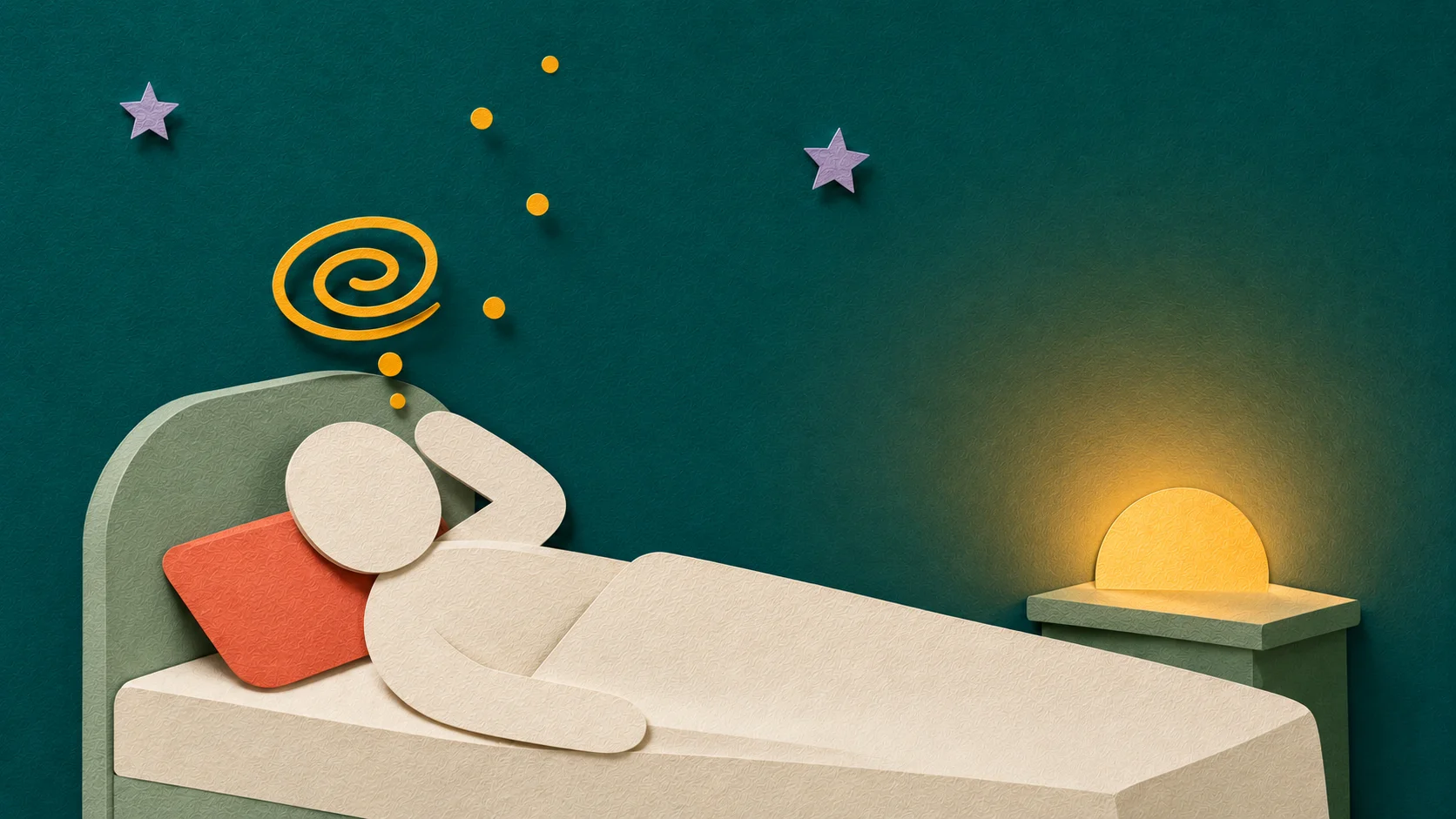
ADHD sleep problems affect roughly 75 percent of adults with ADHD, against a base rate closer to 30 percent in the general adult population — a gap that has been documented in study after study for two decades and is still routinely treated as a coincidence. It is not. The same neurochemistry that produces the daytime attention symptoms of ADHD also produces the nighttime regulatory failures: a delayed melatonin onset, a circadian period that runs longer than 24 hours, a dopaminergic system that does not reliably power down in the evening, and a prefrontal cortex that remains stimulus-seeking when it should be transitioning to quiescence. The standard sleep hygiene advice — darker room, no screens, consistent schedule — was not written for this nervous system. It assumes a circadian system that is calibrated to the conventional 22:00 to 06:00 window, and when that assumption is wrong, the advice fails not because the person is undisciplined but because the underlying timing system is set elsewhere. The most useful starting frame is the same one that governs every other ADHD regulatory failure — the window of tolerance and ADHD — applied here to the specific transition from wakefulness to sleep.
You are not lazy or undisciplined. Your circadian system is calibrated differently, and the medicine of sleep has spent forty years refusing to acknowledge that.
ADHD Sleep Problems Are Not a Side Effect — They’re a Core Feature
The clinical framing of ADHD-related sleep difficulties has shifted substantially over the past fifteen years, largely through the work of Sandra Kooij in Amsterdam and her colleagues across European chronobiology research. The older framing treated sleep disturbance as a comorbidity — something that happens to occur alongside ADHD with statistically uncomfortable frequency. The current framing, supported by neuroimaging, polysomnography, and dim light melatonin onset measurements, treats sleep disturbance as a direct expression of ADHD itself, mediated through the same neurochemistry that produces the daytime symptoms.
The neurochemistry: dopamine, melatonin, and circadian timing
The suprachiasmatic nucleus, the brain’s master clock, runs on a circadian period that is genetically slightly longer than 24 hours in most humans — approximately 24.2 hours on average. Each morning, light exposure resets this clock to align with the solar day. In ADHD, two related differences shift this process. First, the dopamine pathways that contribute to circadian phase regulation are under-active, which is associated with a delayed circadian phase — the dim-light melatonin onset typically shifts later by 1 to 2 hours in adults with ADHD compared with the general adult population (Bijlenga et al., 2013). Second, the dim light melatonin onset — the moment in the evening when the pineal gland begins releasing melatonin — is shifted later by approximately 1 to 2 hours compared with the general adult population.
The downstream effect is straightforward. A neurotypical adult whose melatonin onset begins at 21:00 will feel naturally drowsy around 22:30 and fall asleep without difficulty. An adult with ADHD whose melatonin onset begins at 22:30 or 23:00 will not feel naturally drowsy until midnight or later, and forcing a 23:00 bedtime produces exactly the experience most adults with ADHD describe — lying awake, mind active, body restless, until the actual circadian signal for sleep finally arrives in the early hours of the morning. This is not insomnia in the conventional sense. The person can sleep. The biological clock is simply set later than the social clock.
The delayed sleep phase pattern (the ADHD chronotype)
Delayed sleep phase is the most consistently documented sleep finding in adult ADHD. In population studies, between 50 and 75 percent of adults with ADHD meet criteria for some form of delayed sleep phase pattern, against a base rate of about 0.2 to 10 percent in the general adult population depending on how strictly the diagnostic threshold is set. This is not a small statistical bump. It is one of the largest comorbidity effects in psychiatric epidemiology, and it suggests that the delayed chronotype is part of the ADHD phenotype itself rather than something layered on top of it.
What the delayed sleep phase pattern looks like in practice is a person whose natural sleep window — the window during which their body actually wants to sleep — sits somewhere between midnight and 09:00, or 02:00 and 10:00, or in more pronounced cases even later. When that person is free of work and social obligations, they typically sleep this schedule, achieve normal total sleep duration, and feel rested. When that same person is forced into a conventional 22:00 to 06:00 schedule, they accumulate sleep debt on every working day, recover incompletely on weekends, and live in a state of chronic mild sleep deprivation that compounds every other ADHD symptom.
Why this isn’t fixed by “going to bed earlier”
The single most common piece of advice given to adults with ADHD sleep problems is some variant of “go to bed earlier.” This advice misunderstands the mechanism. Going to bed earlier when the circadian system has not yet generated a sleep signal does not produce earlier sleep — it produces earlier time in bed, lying awake. The melatonin onset is a biological event with a fixed time set by the circadian clock, not a behavioral event that can be moved by choosing to lie down sooner. Shifting the actual sleep onset requires shifting the circadian phase, and that requires interventions that act on the clock itself: timed light exposure, properly dosed and timed melatonin, and consistent wake times that anchor the system from the morning side rather than trying to push the evening side.
The exhausting feature of being told to go to bed earlier when one cannot is that the failure to comply gets read as a willpower problem. It is not. It is a phase mismatch between the social schedule and the biological clock, and willpower has no mechanism by which to alter a biological clock.
The Four Sleep Problem Profiles in ADHD
ADHD sleep problems do not present uniformly. Four distinct profiles emerge in the clinical and research literature, and most adults with ADHD recognize themselves in one or, more commonly, two of these patterns at once. The treatment implications differ enough that distinguishing them matters.
Profile 1: Delayed sleep onset (the most common — can’t fall asleep)
This is the profile that lines up most directly with the delayed sleep phase mechanism described above. The person can sleep, the sleep is reasonably restorative when it happens, but the onset is shifted later than the social schedule allows. The internal experience is of being tired but unable to fall asleep — what some adults call “tired and wired.” The mind is active, the body is restless, and the conventional bedtime arrives with no biological signal that sleep is approaching. This is the dominant sleep complaint in adult ADHD, and the one most often misclassified as insomnia.
Profile 2: Fragmented sleep (waking through the night)
A secondary profile involves sleep that does begin at a reasonable time but does not consolidate. The person falls asleep, wakes within 90 minutes to two hours, falls back asleep, wakes again, and continues this cycle through the night. Polysomnography studies of adults with ADHD show shorter total slow-wave sleep, more frequent micro-arousals, and an architecture that is shallower and more easily disturbed than that of comparison adults. The subjective experience is of having slept poorly even when the clock shows eight hours of in-bed time. This profile often coexists with the delayed-onset profile, producing a sleep window that is both shorter and lower-quality than the official duration suggests.
Profile 3: Restless / overactive sleep (RLS, periodic limb movements)
Restless legs syndrome and periodic limb movement disorder are dramatically overrepresented in ADHD — by some estimates two to five times the population base rate (Cortese et al., 2005) — and both involve the same dopamine pathways implicated in ADHD itself. The person experiences uncomfortable sensations in the legs in the evening or during sleep, an urge to move, and either delayed sleep onset because of the discomfort or fragmented sleep because of the movements. This profile is particularly often missed in clinical interviews because the person may not connect the leg discomfort to the sleep problem and may not mention it unless asked directly.
Profile 4: Sleep inertia / non-restorative sleep (waking already tired)
The fourth profile is the one where the official sleep duration looks adequate — seven, eight, even nine hours — but the person wakes feeling as though they have not slept. The morning is characterized by intense sleep inertia, a cognitive fog that takes one to three hours to clear, and a sense of being more tired after sleep than before it. This profile often reflects sleep that occurred during the wrong circadian window, sleep that was fragmented at a microarousal level not noticed by the sleeper, or sleep architecture in which the restorative slow-wave and REM phases were truncated. The person feels like they need more sleep, but the actual problem is the structure of the sleep they are getting.
Why Sleep Hygiene Advice Fails ADHD Adults
The standard sleep hygiene protocol — eliminate screens before bed, keep the bedroom dark and cool, maintain a consistent schedule, avoid caffeine after noon, do a calming wind-down routine — is genuinely effective for the population it was designed for. That population is adults with a roughly typical circadian phase whose sleep difficulties stem from behavioral or environmental factors. When applied to adults with ADHD-driven delayed sleep phase, the same protocol routinely fails, and the failure is not random.
The “no screens before bed” trap
The reasoning behind the no-screens advice is sound: blue light exposure in the evening suppresses melatonin and can shift the circadian phase later. The problem is that in adults with ADHD, the alternative to screens in the evening is often understimulation, which produces its own activation — restlessness, rumination, anxiety, and a paradoxical increase in alertness. The screen is doing two things at once: providing the dopaminergic stimulation that the ADHD brain seeks, and emitting the blue light that delays melatonin. Removing the screens removes both, and for many adults the loss of the stimulation produces more sleep disruption than the blue light was producing.
The more useful intervention is not removal but modulation: warm screen tints, distance from the eyes, content that is calming rather than activating, and a defined off-ramp rather than an abrupt stop. A 90-minute screen wind-down that gradually reduces stimulation works better for ADHD nervous systems than an instant 21:00 screen ban that produces a three-hour wakeful gap.
The “consistent schedule” myth
Consistency is the central pillar of standard sleep hygiene, and there is a real reason for that — the circadian system entrains to regular cues, and irregular sleep schedules destabilize the entrainment. But the way this advice is usually delivered assumes a specific schedule (22:00 to 06:00, give or take) that is wrong for the ADHD chronotype. Telling someone whose biological clock is set to a midnight onset that they need to be in bed by 22:00 every night is not consistency — it is forced misalignment, repeated. The actual consistency that helps ADHD sleep is consistency aligned with the actual chronotype: same wake time every day, including weekends, anchored by morning light, with the bedtime allowed to fall where it naturally falls given that fixed wake anchor.
The hidden role of emotional dysregulation
The other reason sleep hygiene advice fails ADHD adults is that it does not account for the role of emotional dysregulation in ADHD. The end of the day is when masking efforts collapse, when the day’s accumulated dysregulation has nowhere left to go, and when the mind turns to the conversations replayed, the emails reread, the small social wounds reexamined. This is not a sleep problem in the traditional sense. It is the daytime nervous system continuing into the night, with no mechanism for closing the loop. Sleep hygiene protocols do not address this. The unresolved emotional activation continues to drive cortical arousal long after the room has been darkened and the screens have been removed, and the sleep onset that was supposed to follow the wind-down does not arrive.
The “wired and tired” loop
The signature subjective experience of ADHD sleep problems is being simultaneously exhausted and unable to stop. The body is depleted. The mind is racing. The activation is unproductive but uncontainable. This state is the result of a specific neurochemical pattern — cortisol still elevated from a dysregulated day, dopamine still seeking stimulation that the environment is no longer providing, and the parasympathetic system unable to take over because the sympathetic system is not standing down. Sleep hygiene advice has no mechanism for breaking this loop, because the loop is not behavioral. It is neurochemical, and it responds to neurochemical interventions — properly timed regulation work earlier in the day, body-based tools at the transition point, and in many cases pharmacological support for the actual circadian phase shift that needs to occur.
What Actually Works: A Neuro-Aligned Sleep Approach
A sleep approach that works for ADHD nervous systems starts from a different premise than standard sleep hygiene. Instead of treating the ADHD chronotype as a deviation to be corrected, it treats the chronotype as a given to be designed around. The goal is not to make an ADHD nervous system sleep on a neurotypical schedule. It is to give an ADHD nervous system the conditions it needs to sleep well, on whatever schedule its underlying biology actually wants.
Respect the chronotype (don’t fight delayed sleep phase, design around it)
The first move is diagnostic. A two- to three-week sleep log that records actual sleep onset, wake time, and sleep quality — without any attempt to enforce a particular schedule — reveals the underlying chronotype. For most adults with ADHD, the picture that emerges is consistent: natural sleep onset between midnight and 02:00, natural wake between 09:00 and 11:00, with the gap between social schedule and biological schedule running 2 to 4 hours. Once the chronotype is visible, the design question becomes negotiable: which obligations can be shifted to align with the biological schedule, and which require either chronotherapeutic phase-shifting interventions or strategic accommodation.
Where a phase shift is needed — most often because of work obligations — it is achievable, but only through interventions that act on the clock. Morning light exposure within 30 minutes of waking (10,000 lux for 20 to 30 minutes), strict consistency of wake time, and microdose melatonin taken 4 to 6 hours before desired sleep onset can together shift the phase by 30 to 60 minutes per week in most adults. This is slower than people want it to be, but the slowness is biological and not negotiable.
Front-load dopamine through the day (so evenings aren’t stimulus-seeking)
The evening dopamine-seeking pattern that drives screen use, snacking, and racing thoughts at bedtime reflects a dopamine system that has been understimulated through the day. When the day has provided sufficient novelty, movement, engagement, and small-stakes reward, the evening dopamine demand is lower and the wind-down is easier. When the day has been a long sequence of low-stimulation obligations, the evening becomes the brain’s only window to seek the stimulation it needs, and that stimulation-seeking blocks sleep.
The practical implication is that improving ADHD sleep often requires improving daytime dopamine satisfaction. Movement breaks, varied tasks, interest-aligned work, and small frequent rewards through the working day reduce the evening stimulus debt that the ADHD brain otherwise tries to settle at 23:00 with a phone in its hands.
Build a wind-down RAMP (not a routine)
The word “routine” implies a sequence performed identically each night, which is the kind of structure that ADHD brains famously resist. The word “ramp” implies a gradient — a progressive reduction in stimulation, cognitive demand, and physical activation across the 60 to 90 minutes before intended sleep onset. The ramp does not require identical steps each night. It requires a directional gradient: brighter to dimmer, faster to slower, more cognitive to more sensory, more demanding to more permissive. A ramp can be improvised. A routine cannot. For an ADHD brain, the ramp tends to be sustainable in a way that a fixed routine is not. (For the parallel framework adapted for children, our ADHD bedtime routine guide covers the kid version in detail.)
Use the body to regulate before the mind can rest
The mind cannot decide to stop being active. The body can be made to send signals that downregulate the mind. Slow nasal breathing with extended exhale, weighted pressure on the chest or thighs, cool air on the face, slow rocking or pacing, humming or vocal toning — these are not relaxation techniques in the spa sense. They are vagal activation tools that shift the autonomic balance from sympathetic to parasympathetic and that work even when the mind is still active. (The same principles underlie co-regulation for children — adults can apply them to themselves once they know how the mechanism works.) These body-based tools are most effective when they have been practiced before the moment of sleep, so that they activate automatically rather than requiring fresh cognitive engagement at 23:30.
When Sleep Problems Mask Something Else
A neuro-aligned sleep approach addresses the underlying chronotype, but it does not address every cause of disrupted sleep in adult ADHD. Three other patterns deserve specific attention, because mistaking one of them for a simple sleep problem produces interventions that fail to land.
Anxiety-driven insomnia
When the inability to sleep is driven by worry rather than by phase delay — when the person would be tired enough to sleep if their mind would stop replaying tomorrow’s meetings — the underlying mechanism is anxiety, not chronotype. ADHD and anxiety co-occur in well over half of adults with ADHD, and the dysregulation patterns of both overlap heavily. Treating the chronotype in someone whose sleep problem is actually ADHD and anxiety driven will not resolve the sleep problem, because the activation that is keeping them awake will not respond to melatonin or light timing. It needs to be addressed at the anxiety level directly.
Burnout disrupting recovery sleep
Adults experiencing ADHD burnout often describe sleep that does not restore them — they sleep many hours and wake exhausted. This is not the same problem as the chronotype mismatch or the delayed onset. It is a recovery system that has been so depleted that ordinary sleep is no longer producing ordinary restoration. Burnout-driven sleep problems require interventions at the overall load level, not at the sleep mechanics level. Sleeping more without reducing the daytime load will not produce recovery, and treating the sleep problem in isolation reliably fails.
Hormonal contributors in women
For women with ADHD, the menstrual cycle, pregnancy, postpartum recovery, and perimenopause each introduce hormonal contributions to sleep that interact with the underlying ADHD chronotype. Estrogen modulates both melatonin production and the dopamine pathways implicated in sleep timing, which means that the same woman with ADHD may experience a much more severe sleep disturbance in the luteal phase of her cycle than in the follicular phase, and may experience a substantial worsening of sleep during perimenopause that is read as worsening ADHD when it is actually a hormonal contribution. Sleep approaches that do not account for these cycles will produce inconsistent results, with the inconsistency itself being a useful diagnostic clue. Our deep-dive on the hormones ADHD cycle covers the full estrogen-dopamine mechanism that drives this variation.
The Medication Conversation
Medication is part of the sleep conversation for many adults with ADHD, both because their ADHD medications affect sleep and because targeted sleep medications — properly used — can be substantial parts of a treatment plan. The decisions here are clinical and require a prescriber, but a few mechanistic notes are useful before that conversation.
Stimulants and sleep timing
The reflexive assumption is that stimulants delay sleep. The reality is more variable. Some adults with ADHD experience improved sleep onset on stimulants because the medication quiets the racing, stimulus-seeking mind that was the actual barrier to sleep. Others experience clear delay if the medication is still active in the evening. The relevant variables are duration of action, dose, timing, and individual metabolism. Long-acting formulations taken at 08:00 can still be active enough at 23:00 to delay sleep in some people, while in others they have cleared sufficiently to be irrelevant. The clinical adjustment is rarely “stop the medication” — it is more often “adjust the timing or formulation.” Some prescribers also add a short-acting evening dose of methylphenidate for adults who experience worse sleep on the long-acting form alone, because the small evening dose can settle the wind-down activation without producing meaningful next-morning carryover.
The role of melatonin (and why dosing matters)
Melatonin used correctly is one of the most useful interventions for ADHD-related delayed sleep phase, and melatonin used incorrectly is one of the most common dead-ends. The pharmacy-standard 3 mg to 10 mg dose taken 30 minutes before bed treats melatonin as a sedative. It is not a sedative. It is a chronobiotic — a substance that signals to the circadian system about the timing of biological night. Research-informed protocols (Kooij & Bijlenga, 2013; Burgess et al., 2010) describe a chronobiotic microdose (typically 0.3 to 0.5 mg) timed 4 to 6 hours before desired sleep onset rather than 30 minutes before bed. The specific dose and timing for any individual should be set with a clinician familiar with delayed sleep phase, because the difference between chronobiotic dosing and sedative dosing is the difference between a working intervention and a counterproductive one. At that dose and timing, melatonin shifts the circadian phase earlier over weeks of consistent use. At the high dose taken close to bedtime, it produces sedation without phase shift, and the sedation often comes with morning grogginess that compounds the sleep inertia profile.
Non-stimulant options that may help sleep
For adults whose ADHD sleep problems do not respond well to chronotype interventions and microdose melatonin, several pharmacological adjuncts may be considered with a prescriber. Guanfacine and clonidine, both alpha-2 agonists, have sedating profiles and are sometimes used as evening adjuncts that can help wind-down activation. Trazodone, a sedating antidepressant, is sometimes used off-label for sleep onset. Atomoxetine, a non-stimulant ADHD medication, has a different sleep profile than stimulants and is sometimes preferred when sleep is a primary concern. None of these is a first-line intervention, and all of them require clinical management — but they are options that exist, and they are worth knowing about because they often go unmentioned in standard sleep hygiene conversations.
Frequently Asked Questions: ADHD Sleep Problems
Why do people with ADHD have sleep problems?
Sleep problems are not a side effect of ADHD — they emerge from the same neurochemistry. The dopamine deficit that drives inattention also delays the evening drop in arousal that should signal the brain to wind down. Melatonin onset in adults with ADHD is shifted later by an average of one to two hours, the suprachiasmatic nucleus runs on a longer circadian period, and the prefrontal cortex remains stimulus-seeking long after most people’s nervous systems have started to power down. Between 70 and 80 percent of adults with ADHD meet criteria for at least one clinically significant sleep disorder. The most common is delayed sleep phase, but fragmented sleep, restless legs, vivid dreams, and non-restorative sleep are all overrepresented. Sleep problems are not a comorbidity of ADHD. They are an expression of it through the body’s circadian system.
Is delayed sleep phase the same as insomnia?
Delayed sleep phase and insomnia look similar from the outside — both produce difficulty falling asleep at conventional bedtimes — but the underlying mechanism is different. Insomnia is a failure to fall asleep when the body is ready for sleep. Delayed sleep phase is a circadian system whose internal clock is set later, so the body is not yet ready for sleep at conventional bedtimes; the person is biologically alert at 11 p.m. and biologically tired at 7 a.m. The clinical distinction matters because treatment differs. Insomnia responds to sleep restriction therapy and cognitive behavioral approaches. Delayed sleep phase responds to chronotherapy, properly timed melatonin in microdoses, and morning light exposure. Treating delayed sleep phase as insomnia is one of the most common errors in adult ADHD sleep care.
Should I take melatonin for ADHD sleep problems?
Melatonin can be helpful for ADHD sleep problems, but the dosing most adults use is wrong. The 3 to 10 mg doses sold in most pharmacies are pharmacological doses that override normal melatonin signaling. For ADHD-related delayed sleep phase, the effective dose is typically 0.3 to 0.5 mg taken 4 to 6 hours before desired sleep onset, not 30 minutes before bed. This low-dose, early-timing protocol shifts the circadian phase rather than sedating the brain. Standard high-dose melatonin taken at bedtime often produces a few hours of drowsiness without addressing the underlying circadian misalignment, and can worsen morning grogginess. Anyone considering melatonin for sleep should discuss timing and dosing with a clinician familiar with delayed sleep phase, because the difference between chronobiotic dosing and sedative dosing is the difference between a working intervention and a counterproductive one.
Can ADHD medication cause insomnia?
Stimulant medications can delay sleep onset when they are still active in the evening, and this is the most common medication-related sleep complaint in adult ADHD. However, the relationship is more nuanced than it appears. Many adults with ADHD actually fall asleep faster on properly timed stimulant medication because the medication reduces the racing, stimulus-seeking mind that prevents sleep onset. The key variables are formulation, dose, and timing — a long-acting stimulant taken at 8 a.m. behaves differently in the body at 11 p.m. than the same compound taken at 2 p.m. When stimulant medication appears to be causing insomnia, the first adjustment is usually timing rather than discontinuation. Working with a prescriber to adjust timing, switch formulations, or add a short-acting evening dose for the wind-down period are all options that often resolve the apparent insomnia.
How much sleep do adults with ADHD actually need?
Adults with ADHD need the same total sleep duration as the general adult population — 7 to 9 hours for most people — but they often need it on a different schedule. The clinical evidence does not support the popular idea that people with ADHD need less sleep or function well on less sleep. What it supports is that adults with ADHD often function poorly on sleep that is fragmented, non-restorative, or scheduled against their chronotype. A person whose circadian system is set for 2 a.m. to 10 a.m. and who forces themselves into a 10 p.m. to 6 a.m. schedule is chronically sleep-deprived even if the clock shows 8 hours in bed, because the hours in bed do not align with the hours the body is set to sleep. The most useful question is not how much sleep but how aligned sleep — and how restorative the sleep that does occur.
What This Means for Tonight
If you have spent years being told your sleep problem is a discipline problem — if every well-intentioned article has stacked another rule on top of the previous failed rules, and every failed attempt has confirmed the suspicion that something is wrong with you — the most useful reframe this article can offer is the mechanistic one. The reason the rules have not worked is not that you have not tried hard enough. It is that the rules were written for a circadian system that you do not have. The ADHD regulation window applies to sleep too: outside the window, the system cannot transition to sleep on command; inside the window, transition becomes possible. Most of the work is bringing the system inside the window through approaches that respect the chronotype rather than fighting it.
For tonight specifically, three small adjustments are worth more than another bedtime rule. First, drop the goal of sleeping at a fixed conventional time and observe what your biology actually does — let the wake time stay fixed and let the bedtime fall where it falls. Second, add one body-based wind-down anchor that you can use repeatedly without thinking — a short breath sequence, a brief grounding script, a few minutes of slow movement — so that the transition has a sensory cue rather than an intellectual one. Third, if you are not already working with a clinician familiar with the ADHD chronotype, consider that a starting move. The conversation about microdose melatonin, light timing, and stimulant timing is best had with someone who has had it before. Tonight, ideally, the goal is not perfect sleep. The goal is one regulated wind-down, executed once, available to be repeated.
The longer arc — actually shifting the chronotype, reducing the gap between social schedule and biological clock, restoring sleep that is both adequate in duration and aligned in timing — is months of work, not nights. It is workable. It is not a willpower task. And it begins with believing that your nervous system is not broken; it is simply running on a different timing protocol than the medicine of sleep was built to recognize.
Your sleep is not failing you. The schedule was written for a circadian system you do not have. The work is not more discipline — it is alignment between the clock on your wall and the clock in your brain.
Sources:
Kooij, J.J.S., Bijlenga, D. (2013). The circadian rhythm in adult attention-deficit/hyperactivity disorder: current state of affairs. Expert Review of Neurotherapeutics, 13(10), 1107-1116.
Bijlenga, D., Vollebregt, M.A., Kooij, J.J.S., Arns, M. (2019). The role of the circadian system in the etiology and pathophysiology of ADHD: time to redefine ADHD? ADHD Attention Deficit and Hyperactivity Disorders, 11(1), 5-19.
Hvolby, A. (2015). Associations of sleep disturbance with ADHD: implications for treatment. ADHD Attention Deficit and Hyperactivity Disorders, 7(1), 1-18.
Barkley, R.A. (2015). Attention-Deficit Hyperactivity Disorder: A Handbook for Diagnosis and Treatment (4th ed.). Guilford Press. (Chapter on sleep and ADHD.)
ADDitude Magazine — ADHD and Sleep Problems: The Chronotype Connection
CHADD — Sleep and ADHD
National Institute of Mental Health (NIMH) — Attention-Deficit/Hyperactivity Disorder in Adults: clinical resources on sleep and ADHD.